What a Septic Inspection Actually Checks Before You Buy a Home Outside Bloomington
If you fall for a limestone farmhouse on a few acres outside Bloomington, there is a good chance the property is not connected to city sewer. It is running on a septic system instead, and that changes what you need to check before you sign a purchase agreement.
Homes inside Bloomington city limits typically tie into the municipal sewer system, and Ellettsville has its own municipal sewer system too, with plenty of homes there hooked into it the same way. Septic becomes far more common once you get out into the county, on acreage outside Bloomington and Ellettsville, and in unincorporated parts of Monroe and Lawrence counties. That is not a mark against the property. It is a different kind of infrastructure, buried in the yard instead of running under the street, and it needs its own kind of inspection.
Here is the part that surprises a lot of buyers. A standard home inspection covers the roof, the foundation, the furnace, and the rest of the mechanical systems. It usually stops before the septic tank. That is a separate inspection, and in Monroe County it comes with its own dedicated program.
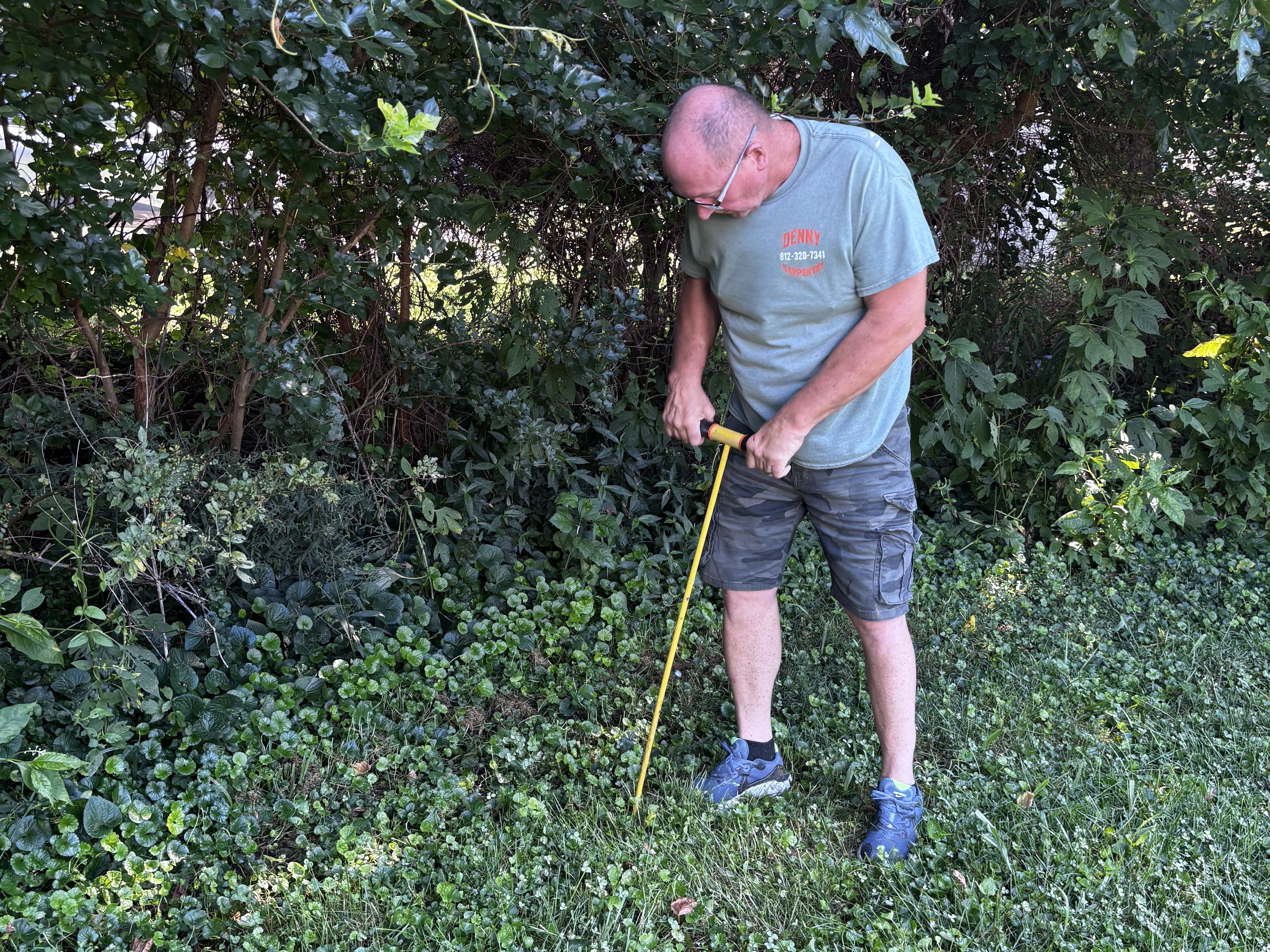
Monroe County's Health Department runs a Real Estate Inspection Program built specifically for home sales. It is not required by the county. It is available on request, and most buyers ask for it as part of due diligence before closing. Health department staff locate the septic tank and the pump tank, if the home has one, and check the effluent level inside with an endoscope. They test the pump where one exists. They examine the drain field, also called the absorption field, for signs it is failing. Depending on the property, they may coordinate with the owner to run dye tracing through the interior plumbing to confirm where the wastewater is going. The fee is $100, and the county follows up with a written report that includes photos and any repair recommendations.
That $100 is worth spending. If a system fails inspection, the county pursues enforcement, and that responsibility transfers to the new owner at closing. Once you own the home, you own the problem, and the problem is not cheap. National averages quote $3,000 to $10,000 for a basic replacement, but that figure assumes deep, sandy soil a system can drain through on its own. A lot of Monroe and Lawrence County properties sit on shallow soil over limestone bedrock instead, and that kind of ground often calls for an engineered aerobic or mound system rather than a standard gravity-fed one. Locally, a full replacement more realistically runs $20,000 to $25,000. Finding that out after closing is a different conversation than negotiating it before closing.
If you are weighing homes on the outskirts of Bloomington, out in the county, or buying a home in Bedford, ask early whether the property is connected to sewer or running on septic. If it is septic, build the inspection into your contract timeline as a contingency, not an afterthought. It is a small step that can save you a large bill later.
I have been helping buyers work through decisions like this for more than 20 years in south-central Indiana, and I would rather you find out about a septic problem in week two of a contract than in year two of ownership. If you are looking at a property that might be on septic, call me and I will help you figure out what to ask before you write an offer.
Lesa Miller, Broker | REALTOR®
Lesa Miller Real Estate | RE/MAX Acclaimed Properties
Serving Bloomington, Bedford and the Surrounding Indiana Communities
(812) 360-3863 | [email protected] | https://LesaMillerRealEstate.com