Switchyard Park: How Bloomington Turned a Rail Yard Into Its Biggest Park
By Lesa Miller | July 31, 2026
Residents visit Switchyard Park more than almost any other spot in Bloomington. Not because every one is looking for a park, but this one answers a question most relocating buyers are quietly asking: what kind of city am I about to call home? Twenty-five years ago, this address was a working rail yard. Fifteen years ago, it was fenced-off industrial land waiting for a plan. Today it is more than 65 acres of lawns, gardens, courts, and trail connections about a mile south of the courthouse square. The story of how that happened tells you something real about this city, and I have watched the whole arc during my years selling homes here.
What was on the Switchyard Park site before the park?
Trains, for more than a century. The McDoel Switchyard was the working heart of Bloomington’s south side, serving a series of railroads that included the New Albany and Salem Railroad, the Monon Railroad, and eventually CSX. CSX phased out operations in 2000, and the last train left the yard in 2004, according to the park’s official history. What remained was a long strip of industrial land running through the middle of town, complete with coal ash, cinders, and a creek that had been buried under the yard in culverts.
The first move came in stages. The city bought a stretch of the former railroad bed, and in 2011 it opened the second phase of the B-Line Trail, the paved pathway that now runs 3.1 miles from Adams Street on the north end to Country Club Drive on the south. That trail turned an abandoned rail corridor into one of the most used public spaces in town, and it set up a bigger question: what should happen to the roughly 60 acres of switchyard sitting beside it?
How did a rail yard become Bloomington’s biggest park?
Slowly, and with a lot of cleanup. Construction began in 2017, and the city held the park’s grand opening on November 16 and 17, 2019, per the City of Bloomington’s announcement. The $34 million project was funded through tax increment financing, and the site work went far beyond landscaping. Crews removed coal ash and cinders left over from the railroad era. Clear Creek, which had spent roughly a century buried in culverts under the yard, was brought back to the surface and now runs through the park in the open. Hundreds of native trees, flowers, and plants went into the ground where the tracks used to be.
The results have drawn notice well beyond Monroe County. In 2024, Switchyard Park received the Great Lakes Park Award, which recognizes park projects driven by community input, per the city’s announcement of the honor. The city’s parks director called Switchyard the largest park development project in Bloomington’s history, and nothing else in town comes close to it in scale.
What is at Switchyard Park today?
The list is long. An 11,000 square foot pavilion. A main stage with room for 5,000 people at a show. A spray pad, a skate park, an accessible playground, fitness stations, and courts for basketball, pickleball, and bocce. A 4.7 acre dog park. Thirty-nine raised community garden beds. The B-Line Trail runs the length of the park, which means you can ride a bike from the courthouse square to the main stage on a paved path the whole way.
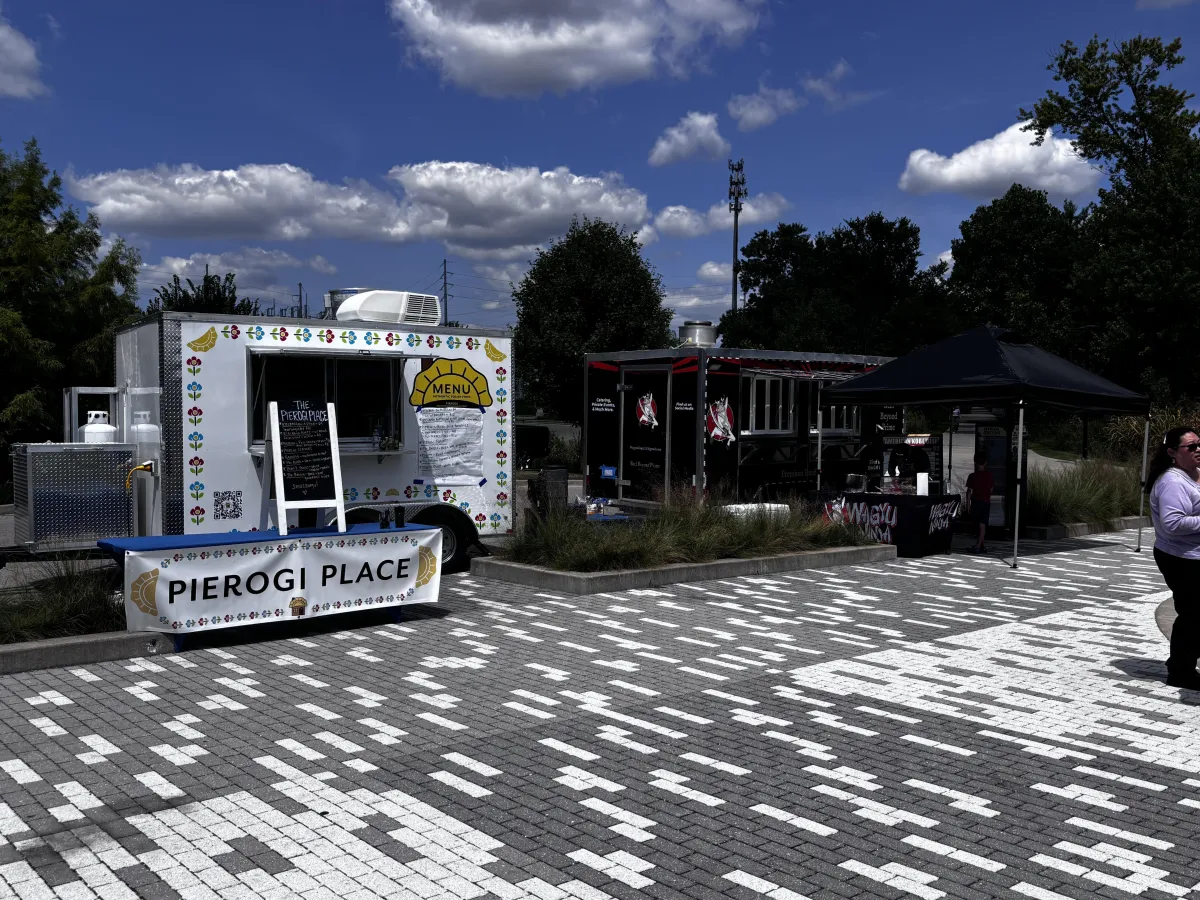
The programming is what fills it up. Food Truck Friday brings a rotating lineup of local food trucks to the park every Friday from spring through the end of October, from 11 in the morning to 9 at night. The Granfalloon festival closes out its summer concert series on the Switchyard stage August 29. On an ordinary weeknight you will find pickup basketball, dogs making friends, gardeners tending their beds, and a steady stream of people on the trail.
What does Switchyard Park mean for home buyers and sellers?
Public investment at this scale changes how a part of town gets used. When I show homes on the near south side, the park and the B-Line come up in nearly every conversation, and buyers comparing living near downtown Bloomington against homes farther out want to know what sits within a short walk or ride of the front door. A home near the B-Line corridor has a different daily rhythm than it did fifteen years ago, and the park is a large part of why.
There is also a bigger point, the same one I made about Nick’s English Hut and its nearly one hundred years on Kirkwood Avenue. Bloomington keeps its history in use. This city took a contaminated rail yard and spent a decade turning it into the busiest public gathering space in town rather than letting it sit behind a fence. If you are weighing a move to south-central Indiana, that pattern deserves as much attention as any single listing, because it tells you how this community treats the places it already has.
If you are thinking about buying or selling in Bloomington, or you want an honest read on what daily life looks like near the B-Line corridor or anywhere else in the area, call or text me at (812) 360-3863, or visit LesaMillerRealEstate.com. I have been doing this for over 20 years, and I am glad to help you think it through.
Lesa Miller, Broker | REALTOR®
Lesa Miller Real Estate | RE/MAX Acclaimed Properties
(812) 360-3863 | [email protected]
LesaMillerRealEstate.com