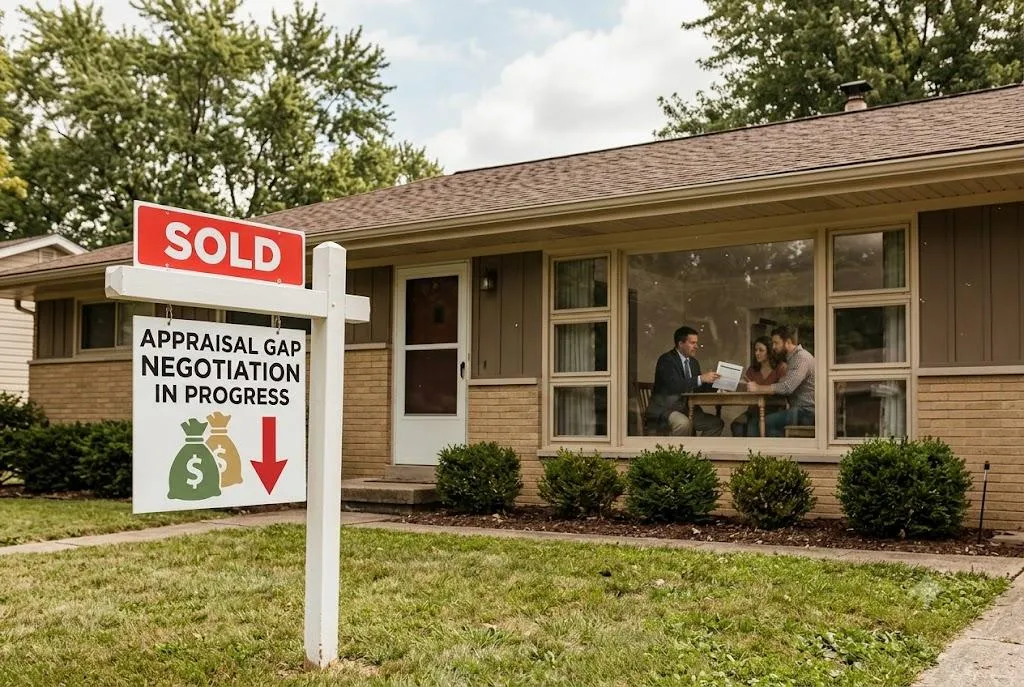
What Happens When a Home Appraisal Comes in Low in Bloomington, Indiana
Your offer got accepted. The inspection went fine. Then the appraisal comes back below what you agreed to pay, and the whole deal feels like it is in trouble. It is not, at least not automatically. An appraisal gap is one of the most common snags in a real estate transaction, and most purchase agreements already spell out what happens next.
A lender will not finance more than a home is worth on paper. When you get a mortgage, the bank sends a licensed appraiser to confirm independently that the property supports the loan amount. The appraiser looks at square footage, condition, recent upgrades, and what comparable homes nearby have sold for, then assigns a value to the property. If that number lands below your contract price, the difference between the two is the appraisal gap.
Say you agreed to pay $370,000 for a home and the appraisal comes back at $355,000. Your lender will only finance based on the lower number. That $15,000 difference has to get resolved before you can close, one way or another.
Nobody wins by panicking, and every gap gets resolved one of a few ways. The seller can lower the price to match the appraisal, which erases the gap outright. The buyer can bring extra cash to closing and cover the difference. Both sides can split the gap and each absorb part of it. If the purchase agreement includes an appraisal contingency, the buyer can walk away and get earnest money back if neither side wants to move on price. And if there is reason to think the appraiser missed relevant comparable sales, either side can ask the lender for a reconsideration of value before treating the number as final.
There is a difference between offering appraisal gap coverage and waiving the appraisal contingency entirely, and buyers sometimes treat them as the same thing. Gap coverage means agreeing in advance to cover a set amount above the appraised value, say up to $10,000, while keeping a contingency in place beyond that number. Waiving the contingency entirely means giving up that protection no matter how large the gap turns out to be. The first is a calculated risk. The second is open ended, and it deserves a real conversation with your agent and your lender before you decide it is worth it to win a competitive offer.
Appraisal gaps tend to show up most in competitive offers, and Monroe County still produces some of those. Based on most recent Indiana Regional MLS data, homes here closed at 97.1% of original list price on average through the first half of 2026. That is not a market where sellers are giving homes away, and buyers who waive protections to make an offer stronger need to understand what they are agreeing to cover. I wrote more about how buyers are structuring competitive offers in Multiple Offer Situations in Bloomington, Indiana. Financing adds another layer to that decision. The 30 year fixed rate averaged 6.58% as of July 23, 2026, according to Freddie Mac's weekly survey. A buyer already stretching to qualify at that rate has less room to write a check for an unexpected $10,000 or $15,000 gap, which is exactly why this decision belongs in the offer strategy conversation, not after the appraisal report lands.
Most purchase agreements used in Indiana include some form of financing or appraisal contingency, and the appraisal itself typically comes back during the same window buyers are tracking other contract deadlines. That is part of why what happens at closing in Bloomington, Indiana rarely moves as fast as buyers expect. Earnest money is part of what a contingency protects too, and understanding what earnest money covers before you write an offer saves a lot of stress if an appraisal comes back low.
An appraisal gap is a decision point, not a verdict on your deal. Buyers and sellers who handle it well are usually the ones who understood the possibility before it came up. If you have questions about how appraisal gaps work on a home you are considering, call me at (812) 360-3863 or visit LesaMillerRealEstate.com.
Lesa Miller, Broker | REALTOR®
Lesa Miller Real Estate | RE/MAX Acclaimed Properties
Serving Bloomington, Bedford and the Surrounding Indiana Communities
(812) 360-3863 | [email protected] | LesaMillerRealEstate.com