What Is Butler Park Like in Bloomington’s Near West Side Neighborhood?
If you’re trying to get a better feel for Bloomington, Indiana, one of the smartest things you can do is pay attention to the parks that anchor each neighborhood. They usually tell you a lot. They show you how people use the area, how it feels on a normal day, and what kind of rhythm the neighborhood has when nobody is trying to sell you on it. Butler Park is one of those places. If you’re exploring Bloomington’s Near West Side, this park gives you a very real sense of the neighborhood.
I’m Lesa Miller, and as a Bloomington, Indiana real estate professional, I help buyers and sellers understand not just houses, but the communities around them. If you’re thinking about moving to Bloomington, or you want a clearer feel for the Near West Side before you make a decision, reach out to me. I’d be glad to help you look at the area with a local lens.
Butler Park matters because it is more than a patch of green space. It reflects the history of the Near West Side, the practical side of neighborhood living, and the kind of everyday community features people often overlook until they realize how much they use them. When buyers ask me what makes one part of Bloomington feel different from another, this is exactly the kind of place I think about.
The Near West Side has deep roots in Bloomington. The neighborhood has long been recognized for its importance to the city’s social and economic history, and city materials describe it as playing a significant role in Bloomington’s development. A historical marker at the park also ties the area to working-class history, racial integration, and the city’s industrial past, noting that the land later became West Ninth Street Park before being acquired by the City of Bloomington in 1974 and turned into a neighborhood park and public playground.
That history gives Butler Park a little more weight than a typical neighborhood park. It is not just there to fill space on a map. It sits in an area that has changed over time while still holding onto a distinct identity. That matters for people moving to Bloomington because neighborhood character is not something you can fully understand from a listing photo. You have to look at places like this and ask what daily life actually looks like.
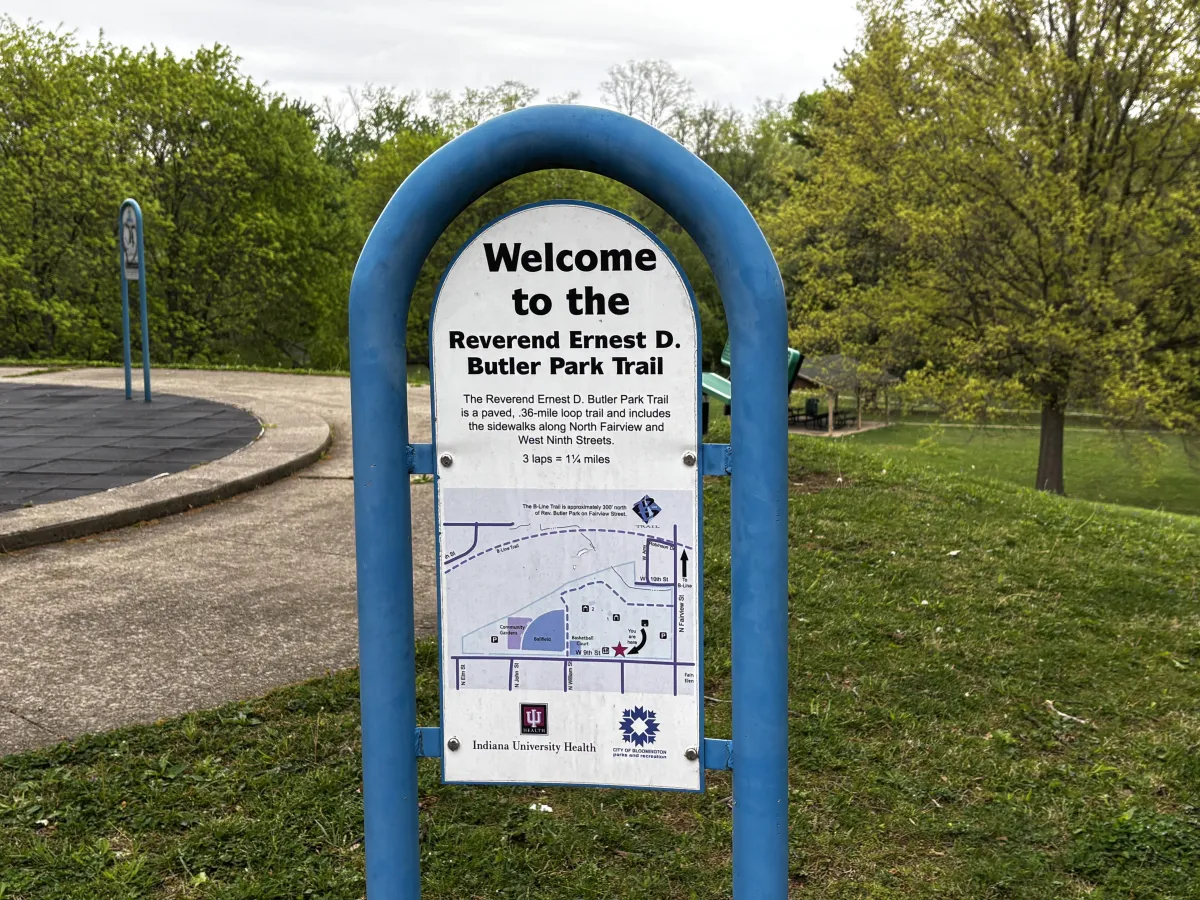
Today, Butler Park gives residents a mix of open space and practical neighborhood amenities. The City of Bloomington identifies the park as home to the Butler Park Community Garden at West Ninth and North John Streets, and city trail information notes a paved loop around part of the park near the playground and play fields. The city also reported a major playground installation in 2021 at Reverend Ernest D. Butler Park in the Near West Side neighborhood.
That combination is part of what makes the park easy to talk about in a real estate context. You have green space. You have a place to walk. You have a playground. You have a setting that feels established because of the mature trees. You also have a neighborhood asset that feels woven into daily life instead of feeling like a destination you have to drive across town to use. For a lot of buyers, that kind of convenience quietly becomes a bigger deal than they expected.
One thing I like about Butler Park is that it feels grounded. It does not come across as overbuilt or overly polished. It feels like a neighborhood park in the best sense of the phrase. There is room to move, room to sit, and room to notice the surroundings. That matters because some buyers are not looking for a flashy amenity package. They want a neighborhood that feels lived in, connected, and real.
The open grassy slope, the mature trees, the playground tucked into the landscape, and the welcome sign for the Reverend Ernest D. Butler Park Trail all give the area a calm, everyday feel. It looks like the kind of place where people can walk a loop, spend time outside, or simply enjoy having breathing room in the middle of a residential area. That kind of setting can add to how people experience a neighborhood, even when it is not the headline feature in a home search.
The park’s identity also carries an important local name. City materials note that Butler Park is named after Reverend Ernest Butler, who pastored Second Baptist Church in Bloomington for more than forty years. That connection gives the space local meaning beyond recreation alone.
For someone considering the Near West Side, Butler Park helps answer a bigger question. What does this part of Bloomington feel like when you are actually living here? That is a much better question than asking only whether a home has the right square footage or finishes. Buyers usually start with the house, but after that, the neighborhood is what shapes day-to-day life. A park like this helps you picture the pace of the area more honestly.
Near West Side itself tends to stand out because it is close to downtown Bloomington while still feeling distinctly neighborhood-oriented. That can appeal to buyers who want access to the center of town, local businesses, and established streetscapes without feeling disconnected from community spaces. I say “can” very intentionally, because fair housing matters and no neighborhood is right for everyone in exactly the same way. The right approach is always to look at your goals, your commute, your budget, and how you personally use a neighborhood, then compare options from there.
That is one reason community articles like this matter. They are not about telling someone where they should live. They are about giving you useful information so you can decide what fits you best. Butler Park is a strong example of how a local amenity can help you understand a neighborhood’s personality without overhyping it.
If you are a buyer, Butler Park can be part of your broader neighborhood tour. When I work with buyers in Bloomington, I always encourage them to look beyond the property line. Drive the surrounding blocks. Visit a nearby park. Notice what feels active, quiet, established, walkable, or changing. Watch where people naturally spend time. That gives you a much more grounded read on the area than scrolling listings ever will.
If you are a seller in or near the Near West Side, places like Butler Park also matter because they help frame the story of location. Buyers are rarely purchasing only the house. They are also buying proximity to green space, access to neighborhood amenities, and the overall feel of the area. When a neighborhood has recognizable places that people use and remember, it helps create a stronger sense of place. That does not replace pricing strategy or home prep, of course, but it absolutely contributes to how buyers perceive value.
Another thing worth noting is that Butler Park reflects a version of Bloomington that many people are actively looking for. It feels established. It has history. It is useful in an everyday way. It is not trying too hard. In a market where some buyers are drawn to communities that feel authentic and rooted, that can matter a lot. The Near West Side is part of Bloomington’s larger story, and Butler Park gives that story a visible, accessible focal point.
So what is Butler Park like in Bloomington’s Near West Side neighborhood? It is a neighborhood park with real local history, practical amenities, mature green space, and a quieter kind of value that becomes clearer the more you pay attention. It helps tell the story of a neighborhood that has long mattered to Bloomington and still offers a sense of place today.
If you’re trying to understand Bloomington one neighborhood at a time, that is exactly the kind of place worth noticing.
I’m Lesa Miller, and I help buyers and sellers navigate Bloomington, Indiana with local insight that goes beyond the listing description. If you want help understanding the Near West Side, comparing Bloomington neighborhoods, or figuring out what part of town makes the most sense for your next move, reach out to me. I’d love to help you make a smart, informed decision.