Moving to Bloomington Indiana from a Major City: What to Know Before You Go
Most of the people I work with who are relocating from Chicago, Indianapolis, Nashville, or one of the coasts arrive in Bloomington with a spreadsheet. They've done the math on housing. They know the cost of living comparison looks good on paper. They've maybe done a weekend visit and liked what they saw.
What they haven't done is figure out what daily life actually feels like when the spreadsheet becomes your address.
I've been watching this transition play out for over 20 years. Some people land here and take to it immediately, like they'd been looking for this without knowing what to call it. Others need a year or so to recalibrate. A few decide it's not the right fit and go back to where they came from. What determines which category someone falls into almost never has anything to do with the things they researched before they moved.
So here's what I'd tell you if you were sitting across from me and thinking seriously about making this move.
The Housing Math Is Real, With a Couple of Caveats
The housing cost difference between Bloomington and most major metros is not a rounding error. Median home prices here have been running in the low-to-mid $300,000s. If you're coming from a market where that number buys you a condominium with a parking space you share with four other units, the shift is substantial.
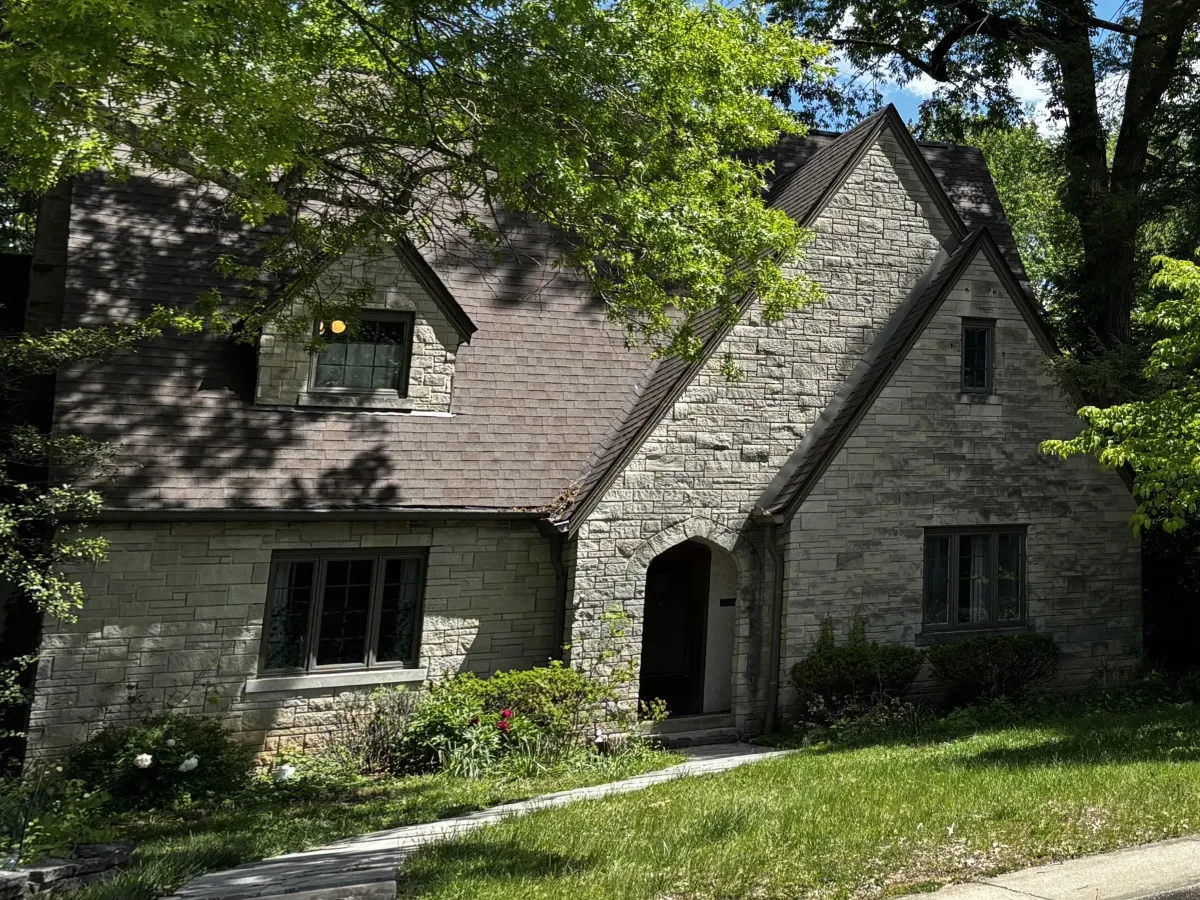
But there are two things the simple comparison leaves out. First, rental prices close to campus run higher than people expect because the student population creates consistent demand. If you're not buying right away and you need to rent while you look, budget $1,500 to $2,400 a month for a full house in most parts of town. Second, the older limestone homes that define so much of Bloomington's character are genuinely beautiful and some of them have had their systems updated as they've turned over to new owners. But some haven't. A good inspection before you buy anything in the older neighborhoods near campus is not optional. It's the whole game.
Property taxes run lower than what most people from Illinois, Michigan, or Ohio are used to paying, and that comparison holds up. The effective rate in Indiana sits around 0.76%, well below Illinois at around 2%. What I'd caution you about is putting too much faith in the tax cap system specifically. The cap controls the rate but not the assessed value, and assessments have been climbing fast. You'll come out ahead versus neighboring states. Just don't go in expecting the cap to protect you from every increase.
The Pace of Life Is Different and That Takes Getting Used To
This sounds obvious until you're living it.
People from major cities who move to Bloomington sometimes go through a phase where they describe the place as slow. Traffic is light by any urban standard. There's no rush hour worth the name on most days. Getting from one side of town to the other takes 20 minutes on a bad day. You will stop being late to things because you genuinely can't be late to things.
And then something shifts. What felt slow starts to feel like time back. The Saturday farmers market west of College Avenue doesn't require planning around parking. A concert at the IU Auditorium doesn't require a 45-minute commute home afterward. Dinner at a restaurant you actually wanted to go to doesn't require a reservation made three weeks out.
The people who struggle with the pace are usually the ones who were energized by the friction of city life and don't realize that until it's gone. If the density and speed of a major city is part of what you genuinely love about where you live, be honest with yourself about that before you move. Bloomington is a lot of things. It is not a small Chicago.
What You Give Up Depends on Who You Are
There's no Whole Foods in Bloomington. The nearest one is in Indianapolis, about 50 miles north. If that's a dealbreaker, it's a dealbreaker. Most people adapt. Kroger and Aldi cover the basics well and there's a Fresh Market for when you want something nicer.
Certain specialty items require planning or a delivery order. Some things you used to pick up without thinking will now require a decision. That's a real adjustment and it's worth acknowledging rather than waving off.
What you gain depends on what you were missing. If you've been paying $3,200 a month in rent to live somewhere you only use to sleep and work, and what you actually care about is being somewhere with genuine outdoor access, a music scene worth your time, good food, and a community that has more going on than the address would suggest, Bloomington keeps surprising people. Lake Monroe is 20 minutes out and enormous. McCormick's Creek State Park is 20 miles west and legitimately beautiful. The Jacobs School of Music at Indiana University is world class. The restaurants on Kirkwood Avenue are better than they have any right to be in a city of 80,000 people.
That combination doesn't exist in many places at this price point. That's the actual case for the move.
The Real Estate Market Here Operates Differently
If you're coming from a market where you've lost four offers in a row because you couldn't go 15% over ask and waive inspection, Bloomington is going to feel different. Not everything here moves in 48 hours. There are still properties where negotiation is possible, where you can ask for an inspection, where you don't need to make a decision before you've finished your coffee.
That said, well-priced properties in the neighborhoods close to campus do move. The demand from faculty, graduate students, and relocating buyers is consistent enough that you shouldn't assume you have unlimited time on something you actually want.
The most common mistake I see relocating buyers make is falling in love with a house before they've thought through where it sits and what their daily life from that address actually looks like. The neighborhood conversation should come before the house conversation. I'd rather spend an hour talking through that with you upfront than have you call me two years later wanting to move again.
For a full picture of where different types of buyers tend to land and why, best neighborhoods in Bloomington Indiana for home buyers covers that question in detail.
The IU Factor Is Real in Both Directions
Indiana University shapes this town in ways that aren't always obvious from the outside. The cultural calendar here, the music, the film, the speakers, the exhibitions, operates at a scale that a city this size has no business sustaining. A $15 concert at the IU Auditorium will genuinely hold its own against performances you'd pay ten times that for in a major city. The Eskenazi Museum of Art has a collection that surprises people. The IU Cinema screens things you'd have to drive to Chicago to see otherwise.
The other side of that is that Bloomington's economy is significantly tied to IU. When the university has a difficult year, the city feels it. Federal research funding cuts and state appropriations reductions in 2025 created real pressure on IU's budget and hiring. If you're relocating specifically for an IU position, those dynamics are worth factoring into your timeline and your thinking about how permanent this move is likely to be.
None of that is a reason not to come. It's a reason to come with clear eyes.
What the Transition Actually Looks Like
The people who adjust fastest are almost always the ones who show up ready to pay attention. They find the farmers market early. They end up at a random Jacobs School of Music recital because someone mentioned it and they go and walk out genuinely stunned by what they just saw. They drive out to Lake Monroe on an October Saturday and understand immediately why people stay.
The people who struggle are the ones waiting for Bloomington to feel like where they came from. It won't. It's a different thing entirely, and that's the point.
If you're doing the math on this move right now and trying to figure out whether it pencils, I'm happy to have that conversation. I know what different budgets get you in different parts of town, I know what surprises people, and I know what questions to ask before you fall in love with an address that might not actually fit your life.
For people still in the early research phase, what does it actually cost to live in Bloomington Indiana goes deeper on the numbers. And if you're trying to decide between Bloomington proper and the surrounding communities, should you buy a home in Bloomington or Ellettsville Indiana is worth reading before you start looking at listings.
Lesa Miller, Broker | REALTOR®
Lesa Miller Real Estate | RE/MAX Acclaimed Properties
Serving Bloomington, Bedford and the Surrounding Indiana Communities
(812) 360-3863 | [email protected]