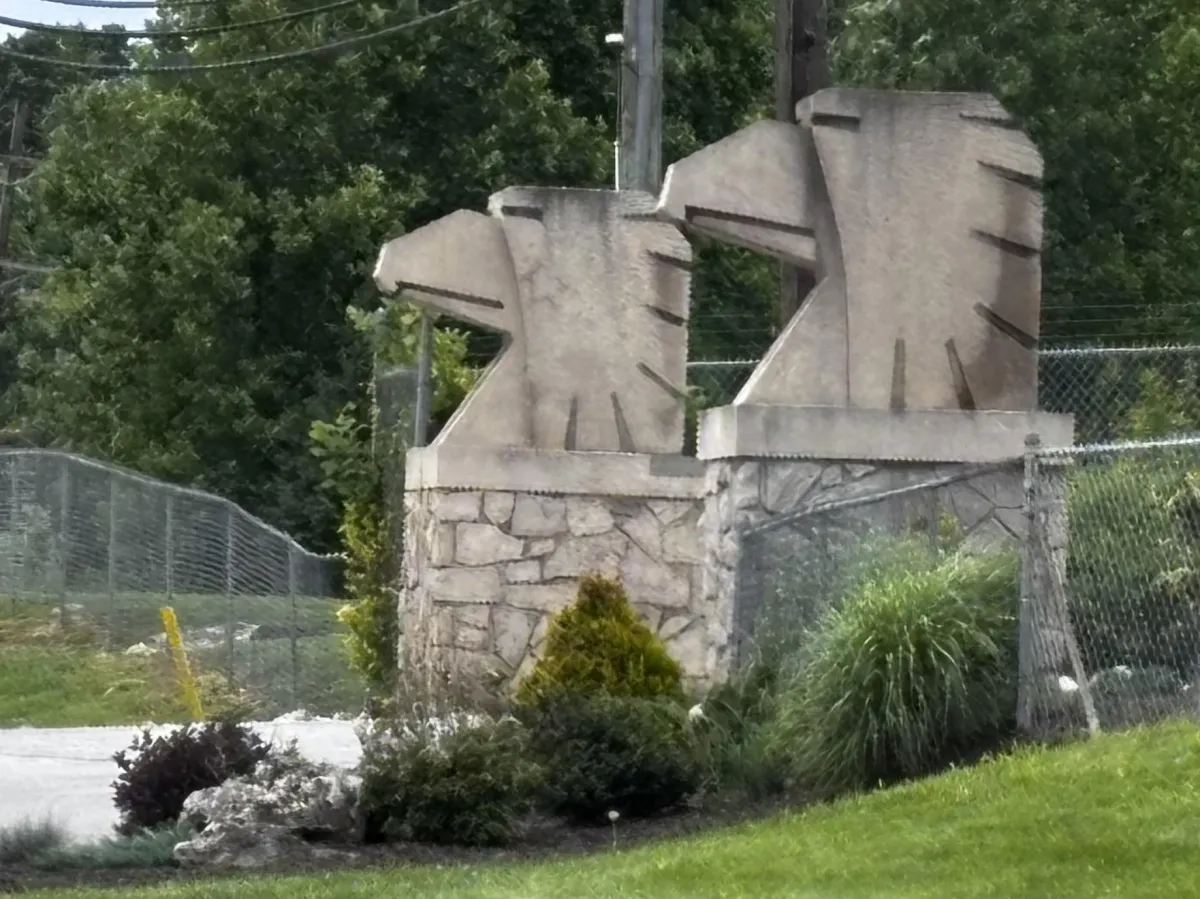
The Stone That Built America — And What It Means to Buy a Home in Bloomington or Bedford
Most people drive into Bloomington or Bedford and notice something they can't quite name. There's a texture to the older buildings here that you don't see most places. A warm gray-buff color. Stone that looks like it grew out of the ground rather than being hauled in from somewhere else.
That's because it did grow out of the ground here. The limestone belt running through Monroe and Lawrence Counties is one of the most significant geological formations in the United States. And for over a century, the stone that came out of this ground has been shaping the skylines of cities most people in those cities have never thought to trace back to southern Indiana.
The Empire State Building. The Pentagon. Washington National Cathedral. 35 of the 50 state capitol buildings in the country. All of them built with stone quarried from the hills between Bloomington and Bedford.
I've been selling real estate in this market for over 20 years and I still think that's worth stopping on for a second. The limestone belt here runs roughly 23 miles between the two cities and reaches depths of 90 feet in places. Geologists trace it back to a shallow inland sea that covered the Midwest during the Mississippian period, roughly 330 million years ago, when marine organisms accumulated into what eventually became the finest building stone quarried in the United States.
If you want to understand what makes this area different from anywhere else in Indiana, that's part of the answer. If you're thinking about buying a home here, this piece is worth your time.
Indiana University and the Limestone Campus
Indiana University's campus is probably the most visible ongoing example of what limestone architecture looks like when it's done right and taken seriously. The university began building in limestone early in the 20th century, and the result is a campus where older limestone buildings and newer ones share a material identity that most universities don't have.
That commitment didn't stop after World War II when steel and glass took over most of American architecture. IU continued incorporating limestone into newer construction, which is not cheap and not easy. It's a deliberate choice that says something about how the institution sees its relationship to this place. When you walk across campus and the buildings read as a whole rather than a patchwork of architectural eras, limestone is a big reason why.
For buyers relocating to Bloomington, that campus is part of what draws people here. The physical character of the place, the way it looks and feels, is real and it's not accidental.
Limestone Homes: What the Mid-Century Era Left Behind
The residential limestone story here plays out mostly in the post-World War II decades. From roughly the late 1940s through the early 1960s, limestone was a common building material for homes in Bloomington and Bedford. Workers knew the trade, stone was accessible, and the result was a generation of solid, distinctive homes that are still standing and still selling.
If you see a mid-century home in this market with limestone walls or a limestone exterior, you're looking at a property that was likely built by someone with real craft knowledge and access to quality local stone. Those homes have held up. Limestone doesn't rot, doesn't warp, and handles Indiana's weather cycles without drama. The Indiana Limestone Institute's own research has documented the material's resistance to acid rain and freeze-thaw cycles. That durability is real.
What changed is economics. Labor costs for skilled stonework increased significantly, and the broader shift in American construction toward faster, lighter building methods pushed limestone out of the entry-level and mid-range residential market. By the 1970s, it was largely gone from new home construction except as an accent.
What Limestone Means in Today's Market
In the current Bloomington and Bedford market, you'll see limestone showing up in a few distinct ways.
Mid-century homes with limestone exteriors or foundations are a specific product. They sell to buyers who know what they're looking at and value the durability and character. Inspections on these homes are worth taking seriously, particularly around mortar joints and any areas where water might pool near the foundation. Limestone itself is extremely durable; the mortar that holds it can require attention over time. A good inspector who knows the material is worth finding.
In the mid-range and upper-mid market, limestone accents on newer construction are a quality signal. Window surrounds, entry features, retaining walls, patio work. When a builder uses Indiana limestone for accent work, they're choosing a premium material. It's not cheap and it's not decorative trim. In the Bedford market particularly, you'll see this more often than you might expect.
At the higher end of the market, primary limestone construction does still happen. Homes where the exterior walls are Indiana limestone are expensive to build and they carry that in their sale price. If you're in that segment and you're seeing limestone as a primary material, you're looking at a home where the builder made serious choices about longevity and material quality.
Bedford: The Limestone Capital
Bedford's identity is more directly tied to limestone than Bloomington's. Lawrence County has called itself the Limestone Capital of the World, and there's legitimate basis for that. The quarrying industry concentrated there for generations, and the built environment of the city reflects it in ways that Bloomington's doesn't to the same degree.
If you're considering Bedford as a place to buy, understanding limestone is part of understanding the city's character and its economy. Active quarrying and fabrication still happen in Lawrence County. Companies like Indiana Limestone, Indian Creek Stone Products, and others employ people and ship stone across the country. That's a real industry with real employment, not just history.
For buyers weighing what makes this region worth considering, the limestone industry is one piece of south-central Indiana's economic foundation. It doesn't get the same attention as Cook Medical or Crane, but it's been steady and it's been here for well over 150 years.
What to Watch for as a Buyer
If you're in the market for a limestone home in Bloomington or Bedford, here's what 20 years of transactions in this area has taught me.
Age the house first. Most true limestone-primary homes are from the 1945-1965 window. That means they're 60 to 80 years old. That's not disqualifying, but it means a thorough inspection matters. Plumbing, electrical, HVAC, and roof are the obvious categories. The limestone exterior itself is usually the least of the concerns.
Look at the mortar. Limestone blocks last essentially forever under normal conditions. The mortar between them does not. Repointing mortar joints is a normal maintenance item on older limestone homes, not a crisis, but it is a cost. A good inspector will flag any areas where mortar has failed or water is getting in.
Understand what you're valuing. Limestone homes in this market often carry a character premium. Buyers who love them are willing to pay for that distinctiveness. If that's you, great. If you're buying primarily on square footage and price per foot, a limestone exterior is a feature you're paying for whether you intended to or not.
And if you're looking at new construction with limestone accents, ask specifically what material is being used and where it's sourced. Local Indiana limestone from a member quarry of the Indiana Limestone Institute is a different product from imported limestone or manufactured stone veneer. The distinction matters for durability and for the character of the finished home.
One More Thing Worth Saying
People come to Bloomington for the university, for Cook Medical, for Crane, for the cultural calendar, for the lower cost of living relative to Indianapolis or Chicago. Those are all legitimate reasons.
But there's something else about this place that's harder to put in a listing. The hills here look the way they do because limestone erodes differently than other rock. The buildings have the character they do because the stone was here. The quarry ponds with their deep blue water, the cut-stone walls along older roads, the way IU's campus holds together visually across a century of construction, all of that comes from the same geological fact.
You're buying a home in a place where the ground itself has been significant. Not every market can say that.
If you have questions about a specific property or want to talk through what limestone means for a home you're considering, I'm happy to walk through it with you. Call or text me at (812) 360-3863 or visit LesaMillerRealEstate.com.
Lesa Miller, Broker | REALTOR®
Lesa Miller Real Estate
RE/MAX Acclaimed Properties
Serving Bloomington, Bedford and the Surrounding Indiana Communities
(812) 360-3863
LesaMillerRealEstate.com