Hopewell South: What Bloomington’s Biggest New Neighborhood Means for Buyers and the Local Market
If you live in Bloomington, drive past the corner of West 2nd Street and Rogers, or have been following local civic news at all, you’ve probably heard the name Hopewell. If you’re new to Bloomington or considering a move, you may not have. Either way, what’s happening on that 24-acre site over the next two to five years is the most consequential thing happening in Bloomington real estate, and it’s worth understanding before you make any decisions about buying or selling here.
The short version: Bloomington is building an entirely new downtown neighborhood on the former IU Health hospital site, and the city council just unanimously approved the central part of it earlier this month. Construction is set to begin next month.
Here’s what that actually means.
What Hopewell Is
For more than 100 years, the area bounded roughly by West 2nd Street, Rogers, Wylie, and Fairview was the site of Bloomington’s main hospital. When IU Health built its new hospital and moved out, the city entered into a purchase agreement for the 24-acre legacy site in May 2018. According to the City of Bloomington’s Hopewell South project page, demolition of the main hospital building was completed in 2023, and the property has been fully transferred to the city.
The plan, in development since 2018, is to turn the entire site into a new downtown neighborhood divided into three phases: Hopewell South, Hopewell East, and Hopewell West. Each phase has its own timeline and character, but the goal across all three is the same: create homeownership-focused, mixed-income housing in a walkable, connected layout that reflects the existing character of Bloomington’s older downtown neighborhoods.
This is the city’s largest housing development ever, according to Indiana Daily Student coverage. Mayor Kerry Thomson described Hopewell as “a pilot for what we would like lots of housing to be in Bloomington in the future.”
What Just Happened (And Why It Matters)
On May 6, 2026, the Bloomington City Council unanimously approved the Planned Unit Development (PUD) for Hopewell South, the first major housing phase. According to Indiana Public Media’s coverage, the PUD rezones the 6.3-acre south property to allow up to 98 homes, most of them single-family dwellings. That’s roughly three times what could be built under the existing zoning.
The path to that 9-0 vote was not simple. There had been months of debate about what “permanent affordability” should mean for housing built on city-owned land. The compromise that finally passed: at least 35% of the roughly 98 dwellings have to be kept permanently affordable, with at least 15% of all units affordable to households earning at or below 90% of area median income, and an explicit goal of reaching 50% permanent affordability (WFHB Local News, May 7, 2026).
The compromise matters. It means Hopewell South isn’t a market-rate development that happens to be on city land. It’s a deliberately mixed-income neighborhood with permanent affordability built into the structure, designed to set a standard the city wants to apply to housing developments going forward.
According to the city’s project page, construction could start as early as May or June 2026, with three early homes being built first under existing zoning while the broader PUD-enabled construction is prepared.
What the Neighborhood Is Designed to Be
The character of Hopewell South is worth understanding because it’s different from most new construction in Bloomington over the last 20 years.
Most new development in Bloomington over the past two decades has been suburban-style: bigger lots, attached garages, subdivisions on the south and west sides of the city. Hopewell South is designed in the opposite direction. Small lots. Walkable streets. A mix of housing types: small detached single-family homes, duplexes, small multifamily buildings, and Accessory Dwelling Units (ADUs). Shared infrastructure that stretches dollars further.
The city partnered with Flintlock LAB, an architecture and building consulting firm, and the Incremental Development Alliance, a national nonprofit that trains small-scale developers, to design the approach. The intent is to give local and smaller builders a way to participate, rather than handing the whole development to one large outside developer. Pre-approved home designs help keep the architectural character coherent while reducing the cost of entry for individual builders.
The neighborhood is intended to be owner-occupied (not rental), which is significant. Most affordable housing developments in college towns lean rental-heavy because that’s what penciled out under traditional financing. Hopewell South is being built specifically for buyers who want to own.
What This Means If You’re Buying in Bloomington
Here’s where it gets practical.
For first-time buyers and households earning at or below area median income, Hopewell South will eventually offer something Bloomington has been missing for years: new construction homes priced for actual working families, not luxury buyers. The 35% permanent affordability requirement means roughly a third of those 98 units will be deed-restricted to stay affordable in perpetuity, not just for the first owner.
This is genuinely new. Bloomington’s housing stock has been pricing out first-time buyers and working professionals for years. Hopewell South is one of the first concrete responses to that.
For buyers looking at downtown adjacent neighborhoods generally, Hopewell South is going to change the conversation about where to look. A new walkable neighborhood near the Square, the Convention Center, and the B-Line Trail is going to be highly desirable. Even if you’re not the one buying in Hopewell, you’re going to be comparing it to the older neighborhoods nearby (Prospect Hill, McDoel Gardens, the broader near-west side) for years.
For buyers in mid-priced ranges who don’t qualify for the affordable units, Hopewell South will still have market-rate homes available. These are likely to be small, walkable, well-designed, and connected to a planned mixed-income community. Different from what most current Bloomington inventory looks like.
For the parent-buyer audience (Indianapolis parents who buy property for IU students), Hopewell South may or may not fit your investment thesis. It’s owner-occupied focused rather than rental, so the deed restrictions may limit how it can be used. If you’re considering this category specifically, that’s a conversation to have before going under contract.
What This Means If You’re Selling in Bloomington
A few things to think about.
For sellers in the broader downtown adjacent neighborhoods: Hopewell South is going to create comparable new construction inventory in your area within the next two to three years. New construction with modern systems, walkability, and design tends to set a different price ceiling than older homes nearby. That’s not necessarily bad for you (it can lift the area’s reputation and appeal), but it changes how buyers will compare your home to alternatives.
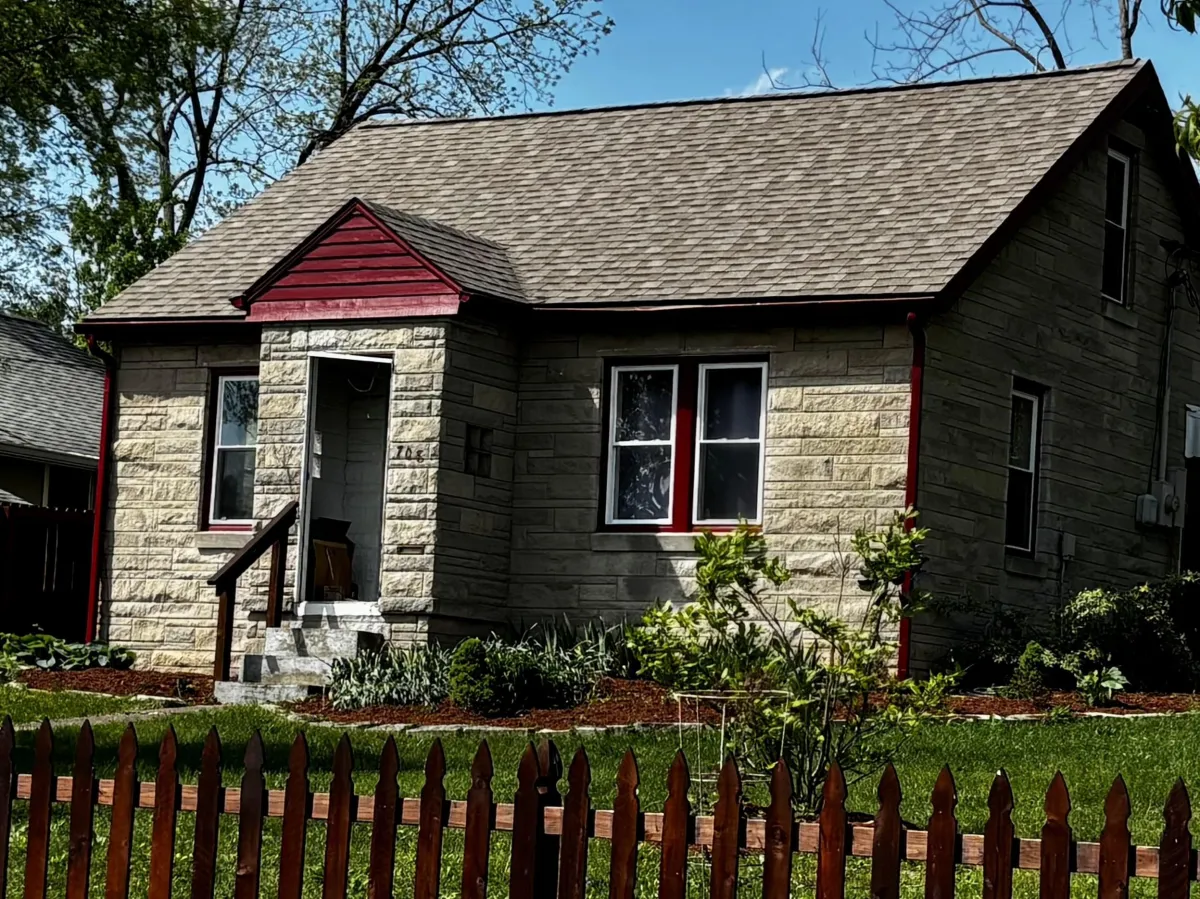
For sellers of older near-west side homes: the existing limestone bungalows, brick homes, and older near-campus inventory aren’t going away. Many buyers will still prefer the character of an older home over new construction. But you’ll be in a market that has more options for those buyers, and your home will need to be priced and presented in a way that competes.
For sellers of larger family homes further from downtown: Hopewell is unlikely to affect your buyer pool much. The audiences for a 3,000-square-foot family home in a established southwest-side neighborhood and a small Hopewell South home are different people with different priorities. Different markets.
What This Means for Bloomington’s Future
Hopewell South is the city’s biggest housing project ever, but it’s also a test case. As Alli Thurmond Quinlan from Flintlock LAB explained, the city is using Hopewell South to “test and calibrate” code changes that could eventually be applied citywide. Outcomes from how Hopewell South builds out will inform future zoning decisions in the rest of Bloomington.
That means the conversation about housing affordability, neighborhood design, and what kind of new development is allowed where in Bloomington is going to be shaped by what happens at Hopewell over the next several years. If you’re considering Bloomington as a long-term place to live, this is one of the most consequential civic decisions in recent memory, and it’s worth paying attention to as it unfolds.
The other phases (Hopewell East and Hopewell West) are at different stages of planning and construction. The full 24-acre redevelopment is a multi-year project. Some of it is still being designed. Some of it has been built (the linear park and infrastructure work on Hopewell East and the Jackson Street work on Hopewell West are largely complete). What you’ll see on the ground over the next two to five years is the most visible transformation of Bloomington’s downtown core in a generation.
A Practical Note for Anyone Considering a Move
If you’re at all interested in downtown proximityor housing that’s been deliberately designed for community rather than just maximum yield to a developer, Hopewell South is worth knowing about before you start looking at listings. Even if you don’t end up buying there, understanding what’s coming changes how you should think about every nearby neighborhood.
The timeline matters too. Construction beginning in June 2026 means the first homes are likely to be ready in late 2026 or 2027. Most of the build-out is over the next three to five years. If you’re moving to Bloomington in summer 2026, you’re not going to be buying a Hopewell South home as your initial residence in most cases. But you could be in a position to be one of the early buyers as units come available, if that fits your situation.
For the broader picture of what’s happening in the Bloomington real estate market right now, what to expect in the Bloomington real estate market this summer walks through the current data and what it means for buyers and sellers. For the cost-of-living picture relocating buyers should understand, what it actually costs to live in Bloomington Indiana covers the financial side. And for the broader summer scene in Bloomington that makes people want to plant roots here, what makes summer in Bloomington Indiana special is worth a look.
If you’d like to talk through how Hopewell South might fit into your specific situation, or how it might affect the value of a home you’re considering selling, give me a call at (812) 360-3863 or reach out through LesaMillerRealEstate.com. I’ve been working this market for over 20 years and I’ve watched a lot of development plans come and go. Hopewell is the rare project that’s actually happening, with the city behind it, the financing in place, and shovels likely in the ground next month. It’s worth understanding before you make any decisions.
Happy Memorial Day.
Lesa Miller, Broker | REALTOR® Lesa Miller Real Estate | RE/MAX Acclaimed Properties Serving Bloomington, Bedford and the Surrounding Indiana Communities (812) 360-3863 | [email protected] https://LesaMillerRealEstate.com